A Long Overdue Update
It’s been quite a while since my last update. But now I have this lovely blog, and every time I post, you lovely subscribers get an email automatically.
I applied a treatment to cut down on varroa mites (aptly named Varroa destructor), little critters that are bad news for bees. I also learned a neat trick to control small hive beetles, another beekeeping pest. If you put small squares of unscented, dry Swiffer sheets in the corners of the boxes, the beetles will get stuck there and not get into the rest of the hive.
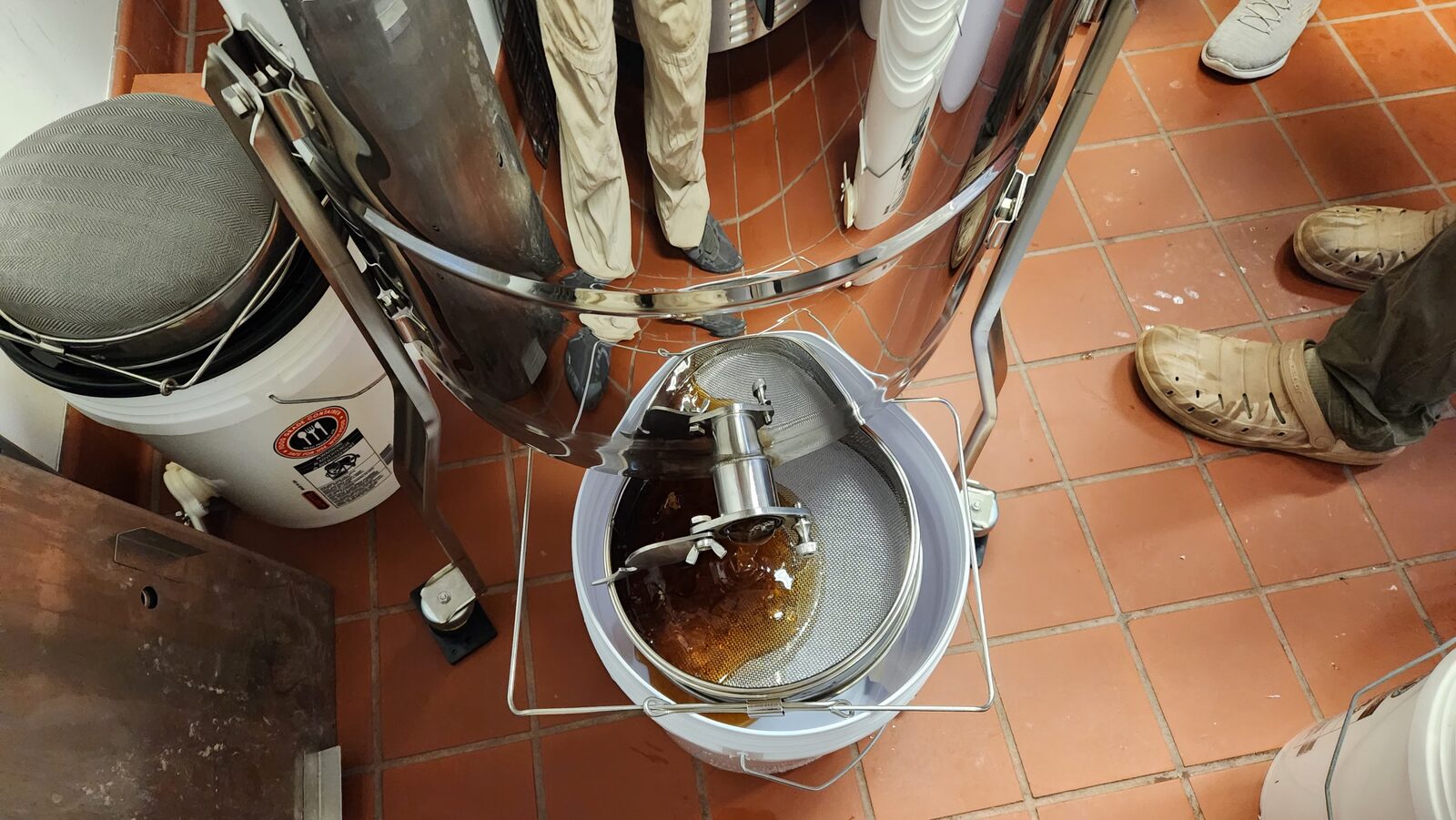
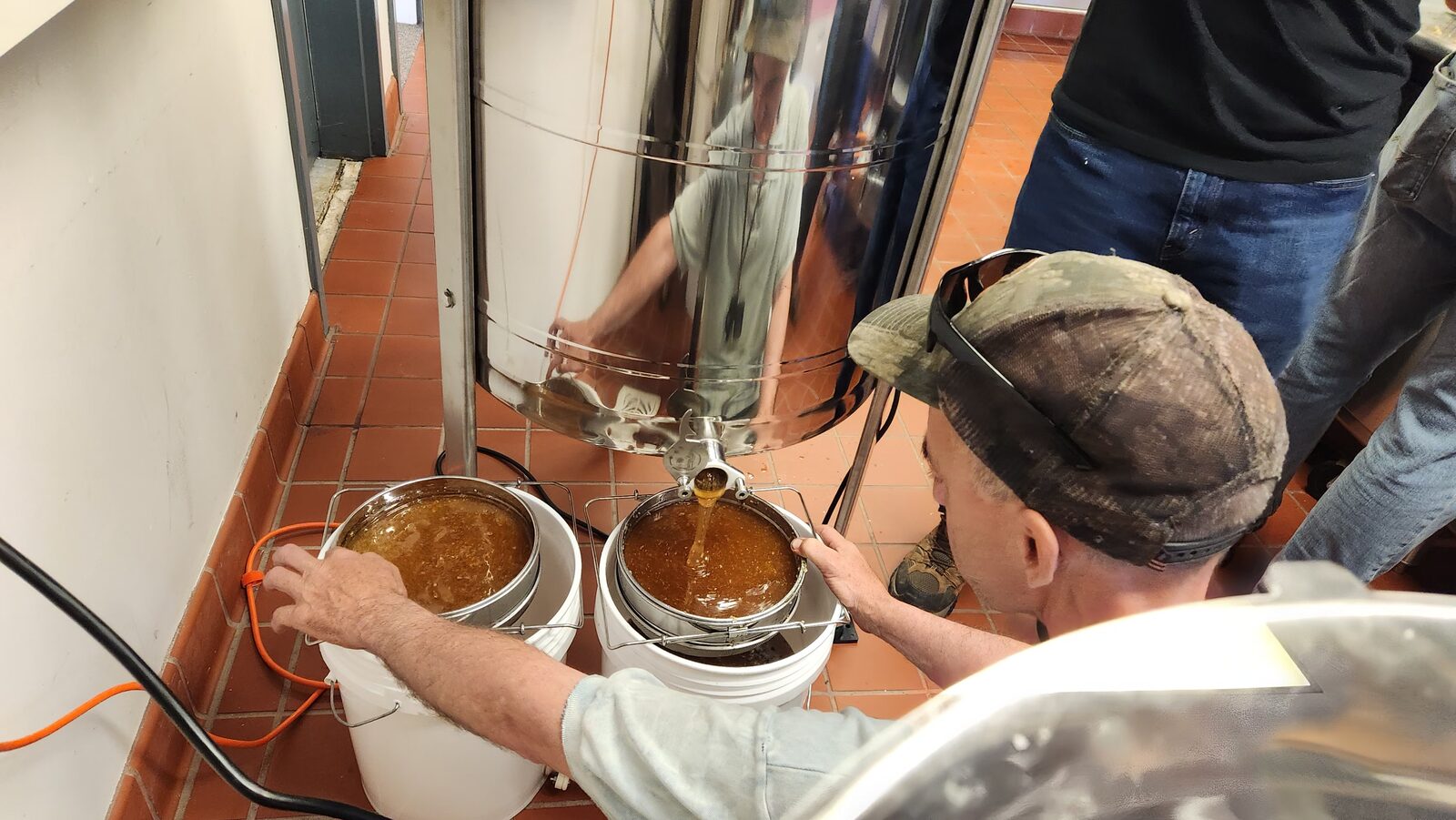
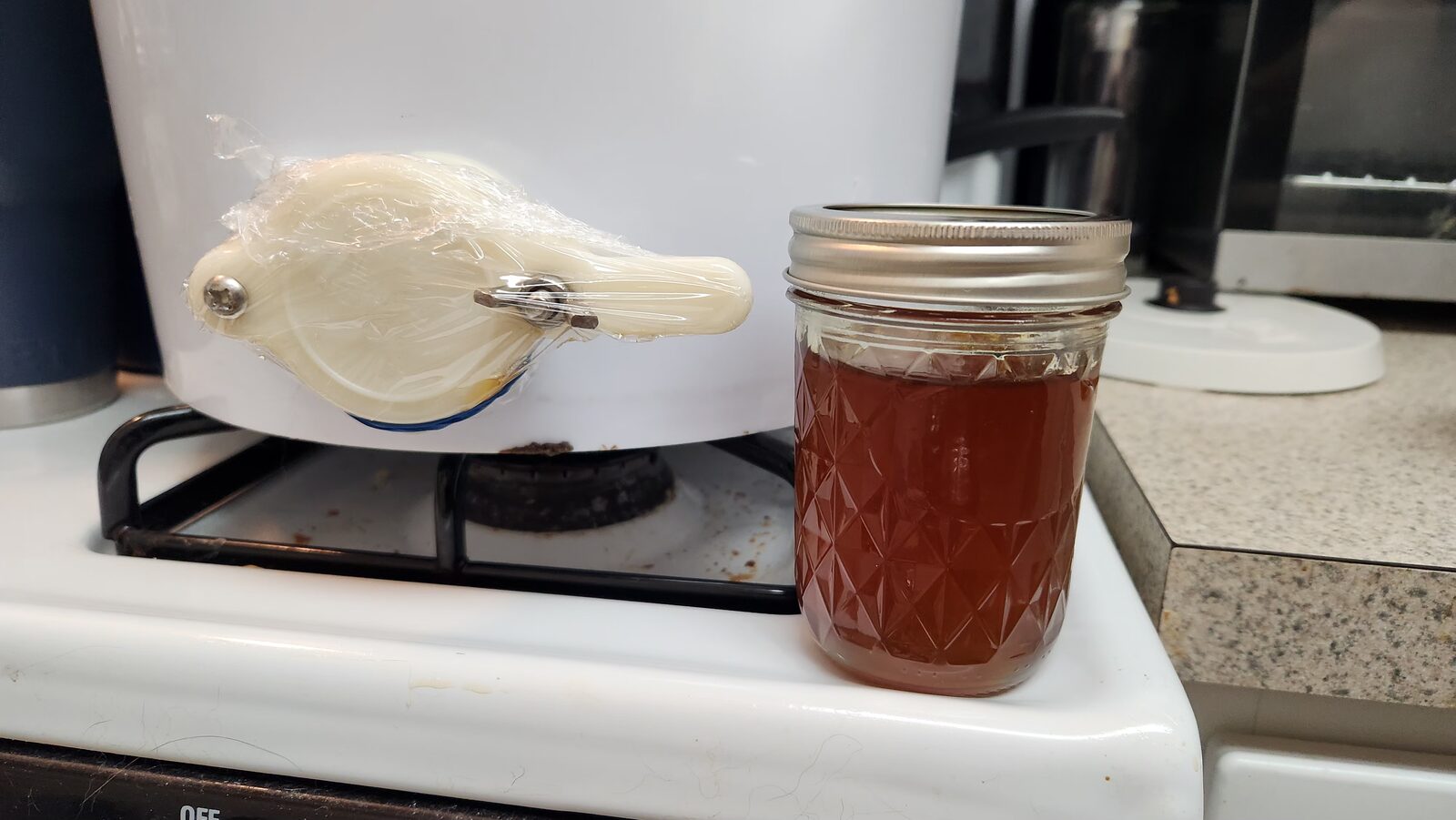
This summer, I harvested about two and a half gallons of honey! This batch was actually from earlier in the season, honey from the hive that absconded. We did the extraction at Christ the King Lutheran Church, where I help Bee-Mentor Steve take care of their hives. The session was mainly to support their Honey Harvest Festival, but everyone there was kind enough to help with my batch too. They’re great people. The final measurement was about 17% moisture, which is right on target. We used a refractometer, a fancy gadget that helps determine the amount of dissolved solids.
During the summer heat wave, I removed the metal outer covers and replaced them with some insulating material to try to keep the temperature down.
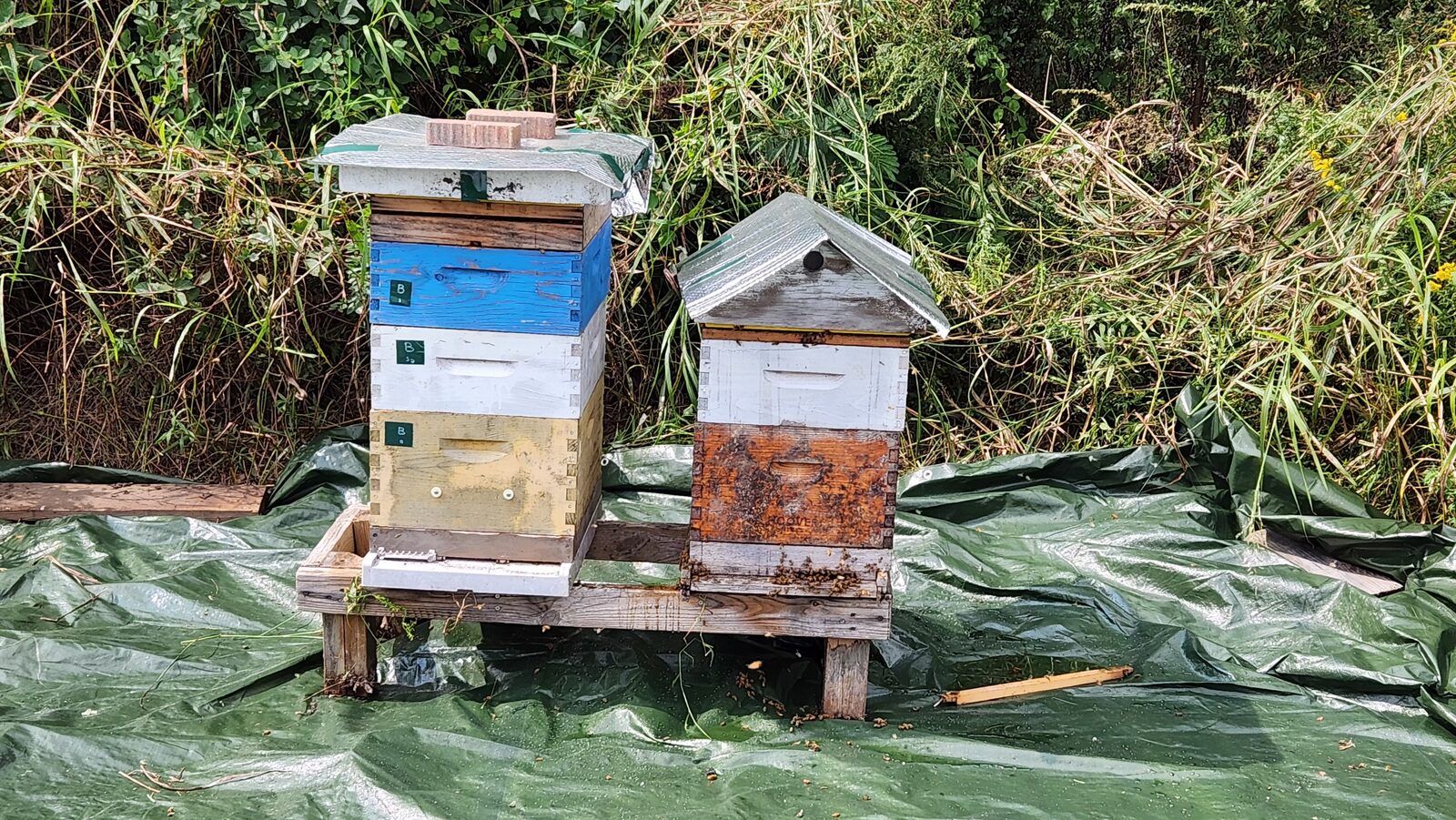
I also did some bee yard maintenance this summer. Initially, I just cleared out a bunch of the tall grass and weeds. There were tons of ticks in there! Later, we put down a big tarp and then covered the area with dirt and gravel. This required heavy machinery!
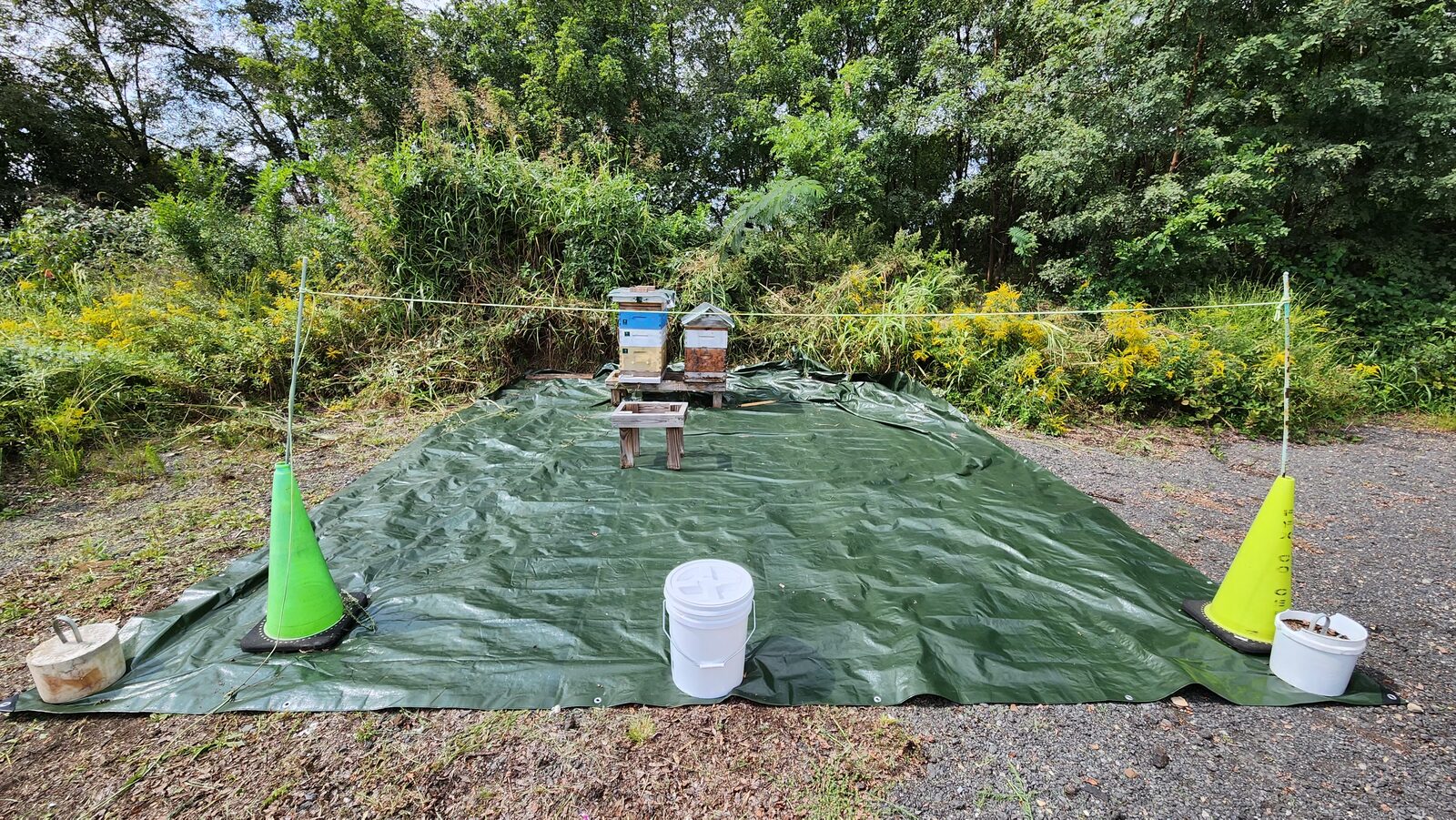
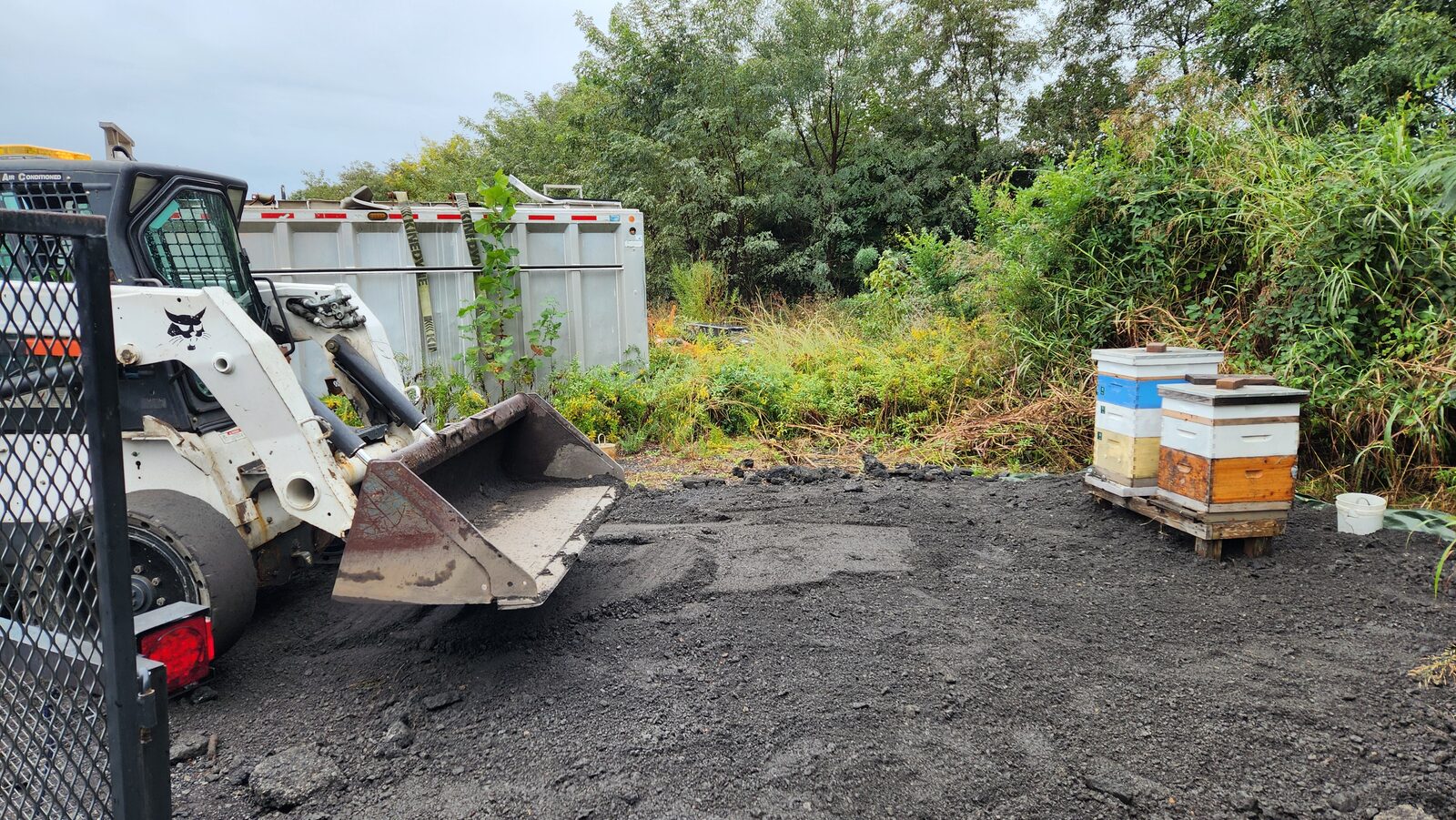
I say “we” because I’m pleased to announce I have Deputy Beekeeper Bradley, who recently graduated from CERT basic training. He’s been a huge help. Now I give all the hard labor to him.
This summer I was also joined by my friends Sam and Brianna, and they took to the bees immediately. We had a great day and a lot of fun. They are going through some challenging times at the moment (I got Sam’s permission to mention this). If you want to learn more and see how you might be able to help, please take a look at their GoFundMe page.
In the late summer, I was alarmed to find several queen cells (larger cells meant for raising a new queen) and panicked a little, worried they were about to swarm (when the queen plus half the colony relocates, a normal part of how colonies spread, but not what I wanted to happen). I didn’t really understand the distinction between the different types of queen cells but my Bee-Advisor Lani talked me down. The next time I checked, they were gone. I was fairly sure that the colony had re-queened.
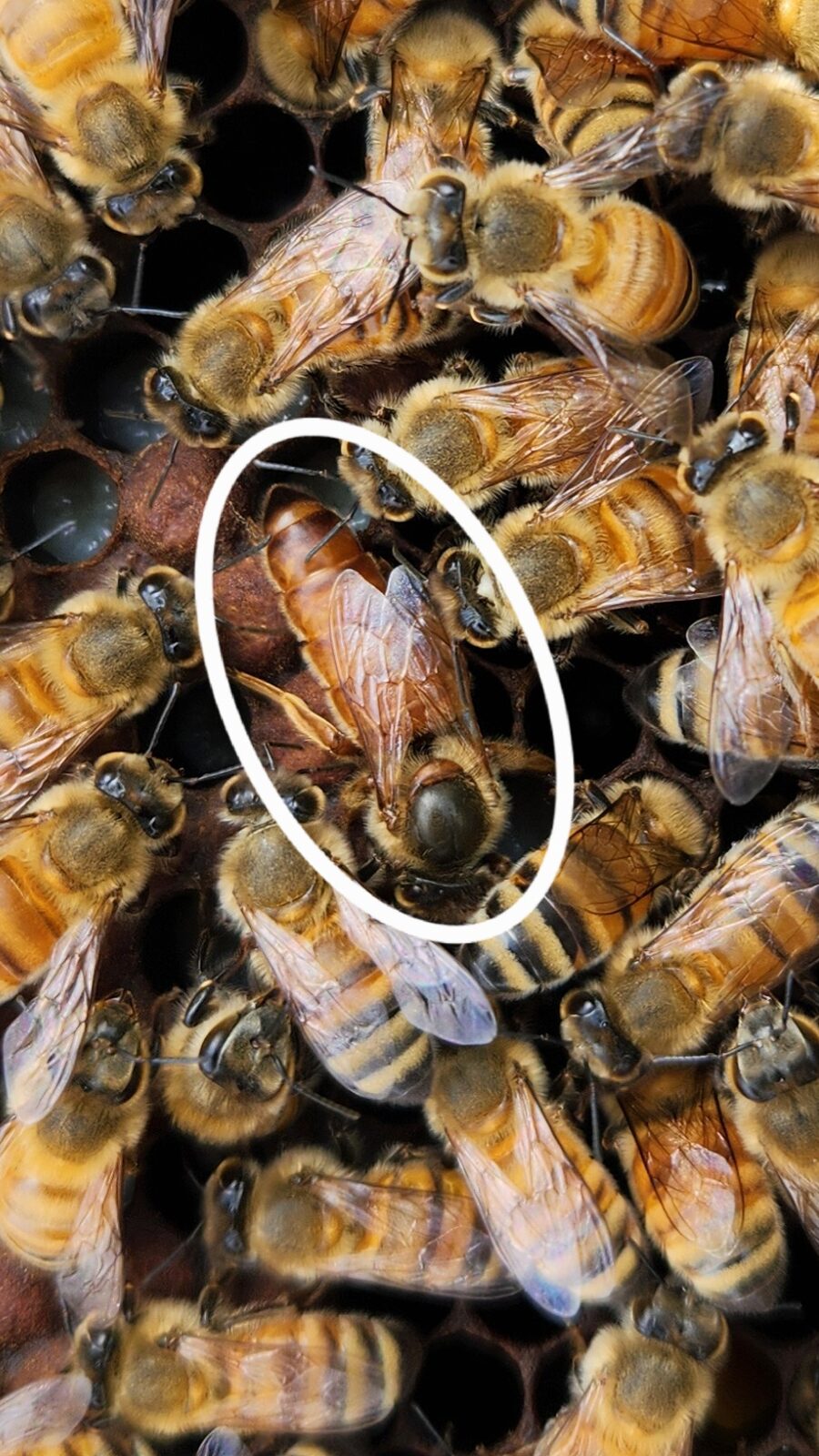
Queens are pretty difficult to spot and they can be sneaky and hide when you open things up, so I didn’t actually see her for a while. You can infer that everything is ok (that your hive is “queen-right”) from the presence of various stages of life: newly-laid eggs, young larvae in uncapped cells, and capped cells where the larvae pupate. Since each stage has a predictable duration, seeing eggs tells you the queen was there within the past couple of days, at the very least.
On my last inspection, I actually spotted the queens in both colonies. The queen in Hive A is unmarked, so it was a stroke of luck that I found her. However, I was quite surprised to find the original marked queen in Hive B! I thought she had been replaced (“superseded” in the bee biz), but there she was, happy as a bee can be.
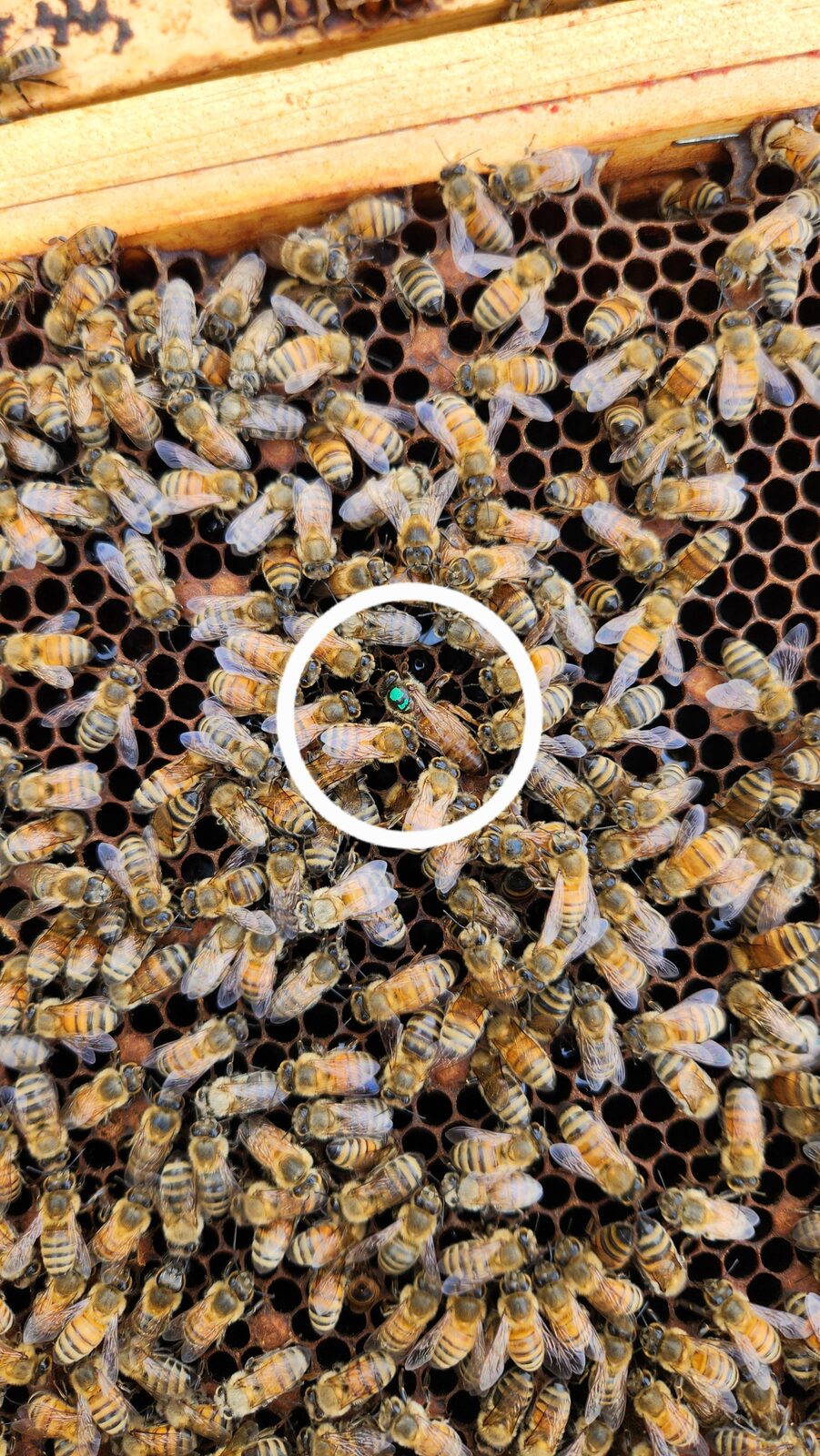
I’ve continued doing regular inspections and so far, nothing seems amiss! They’re a little short on winter food stores (each hive should have about 60 lbs of stored honey), so the past few weeks, I’ve been feeding them heavy 2:1 sugar syrup. They seem to like it. I’ll continue checking on their supply. They’re about 75% of the way there, so they should be able to make up the difference soon.